
Sewer Line Inspection, Repair and Replacement
Roots, corroded cast iron and old clay joints under Austin lots, found with a camera and fixed the way the pipe needs.
The sewer line carries everything the house drains, from the plumbing under the slab out to the city’s connection. When it slows or breaks, the trouble shows up at the lowest drains first: the shower in a slab house, a floor drain, a ground-floor toilet. Cleaning can buy time, but when the pipe itself is cracked, sagging or full of roots, it has to be repaired or replaced.
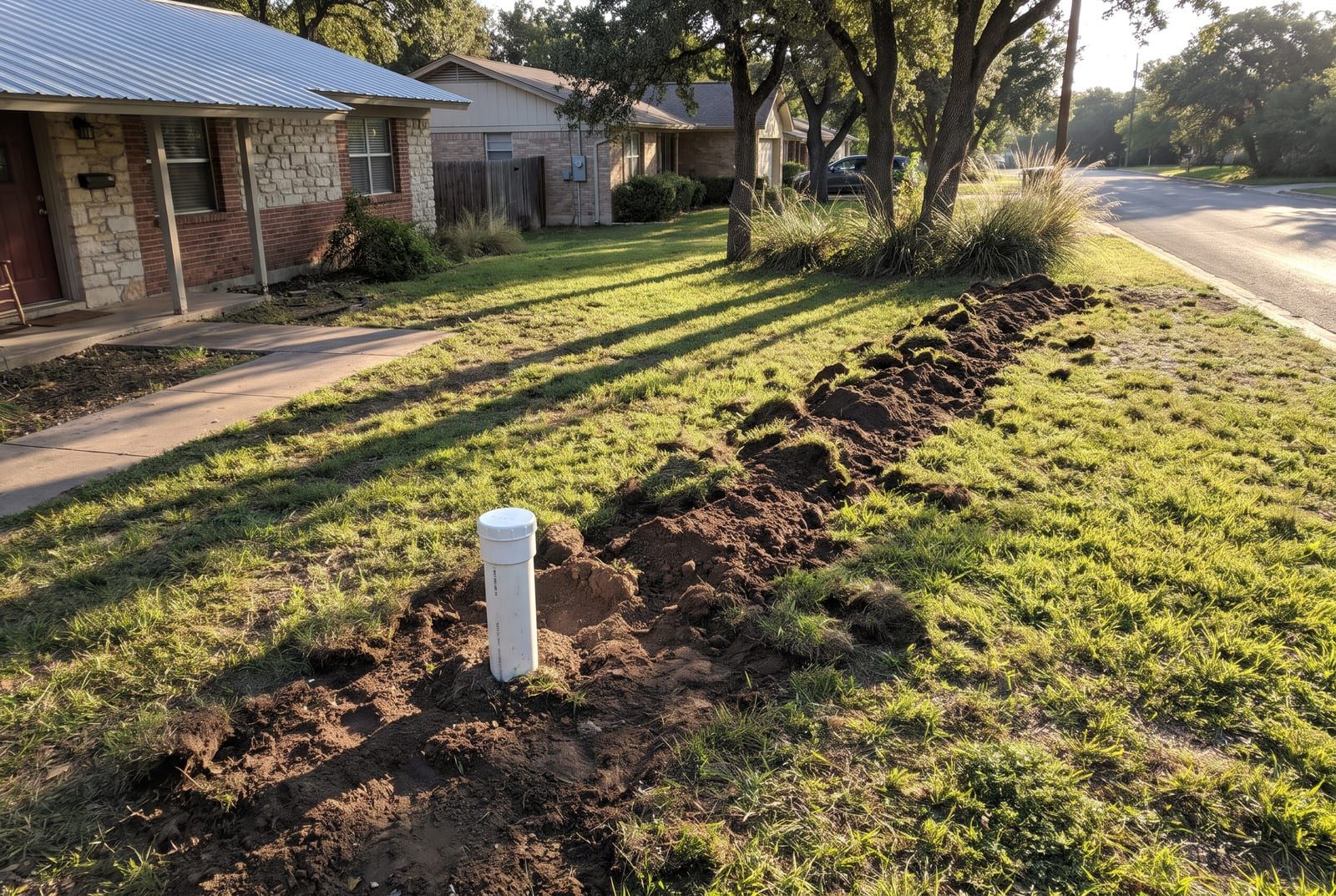
Warning Signs in the Sewer Line
- More than one drain backing up, especially the lowest ones in the house.
- A sewage smell inside or around the yard.
- Soggy, sunken or unusually green patches of lawn along the line’s path.
- Toilets that gurgle or bubble when a tub or washer drains.
- Water coming up at the cleanout or a floor drain.
- Clogs that come back a few weeks after the line was cleared.
Roots and Old Pipe Under Austin Lots
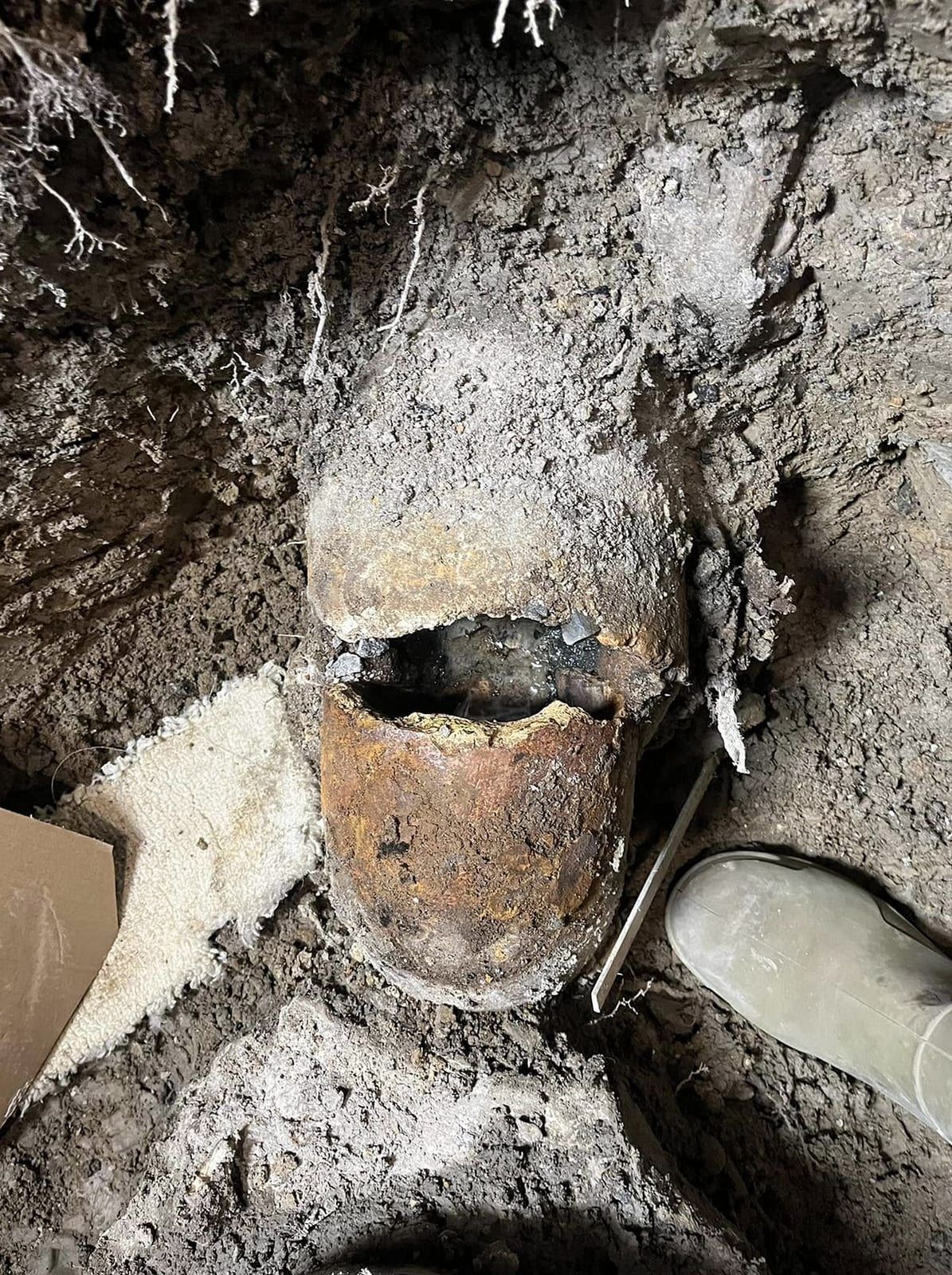
Many Austin houses built in the middle of the last century, in neighborhoods like Hyde Park and Travis Heights, still drain through cast iron, sometimes joined to clay pipe out in the yard. Cast iron corrodes from the inside over the decades until the wall is thin enough to crack, like the pipe in this photo. Clay joints separate as the soil swells and shrinks with drought and heavy rain, and live oak and pecan roots find those gaps and grow into the line.
What a Camera Inspection Shows
A waterproof camera on a flexible cable goes in through the cleanout and travels the length of the line, recording as it goes. The footage shows roots coming in at joints, cracks and holes, sections where cast iron has scaled until the pipe is half closed, offset joints, and bellies where the pipe has sagged and water sits. A locator on the camera head marks the spot from above, so if digging is needed, it is in the right place. The footage makes it plain whether a line needs cleaning, a spot repair or a new pipe.
Open-Trench or Trenchless Repair
How the pipe is repaired depends on its condition, how deep it is and what sits on top of it.
| Method | Disruption to yard | Best suited for | Limits |
|---|---|---|---|
| Open trench | A trench dug along the line; lawn, beds and sometimes a walk are taken up and put back | Collapsed or badly sagging pipe, short runs, lines with many changes of direction | The most digging, and restoring the yard afterwards |
| Pipe lining | Small openings at the ends; a resin liner cures inside the old pipe | Cracked or root-damaged pipe that still holds its shape | Cannot fix a sag or a collapse; slightly reduces the pipe’s inside size |
| Pipe bursting | Two pits at the ends; a new pipe is pulled through as the old one is split | Replacing a whole run under a driveway, trees or landscaping | Needs room for the pits; not for every soil or every pipe material |
Find Your Cleanout
The cleanout is the access point for clearing and inspecting the line. Knowing where it is saves time on any sewer call:
- Walk the side of the house closest to the street, near where the plumbing leaves the slab.
- Look for a short white or black pipe, three to four inches across, with a screw-on cap, at or just above ground level.
- Check flower beds and under shrubs; cleanouts often end up hidden in landscaping.
- In some older houses it is inside, in a garage, a utility closet or behind an access panel.
- Keep the cap clear and screwed down so rainwater and debris stay out.
Sewer Line Questions
Should I get a sewer inspection before buying a house?
For an older house, yes. A standard home inspection runs water down the drains but does not look inside the main line. A camera inspection shows roots, cracked cast iron, sags and old clay joints before you own them, which can change the price or the repair list in your offer.
Who is responsible for the line to the street?
In Austin the homeowner is generally responsible for the private service line from the house to the city’s connection, and the city for the main beyond it. Where exactly that boundary falls depends on the property, and the camera footage helps show where a problem sits.
How do I know roots are the problem?
Root trouble tends to return on a cycle: the line clears, works for a few months, then slows again, often worse after rain. Only a camera confirms it, and it also shows whether the roots came in through a joint that could be lined or a break that needs replacing.
Is a sewer smell always the sewer line?
Not always. A trap that has dried out in a guest bath or a floor drain lets sewer gas in, and a few seconds of running water fixes it. A smell that persists, especially outside near the cleanout or with soggy ground, points to the line itself.
Start With the Drain, or Start With the Line
When a single drain is slow and the rest of the house is fine, drain cleaning is the place to start. When several drains are backing up, book a sewer visit.