
Leak Detection and Repair in Austin Homes
Hidden leaks in supply lines and drains found and fixed before they soak floors and walls.
The leaks that do the most damage are the ones nobody can see. A supply line inside a wall or under a concrete slab can leak for weeks before a stain shows, and by then the floor, the drywall or the foundation pad has taken on water. Leak detection is the work of narrowing it down from “somewhere in the house” to one spot, so only that spot is opened.
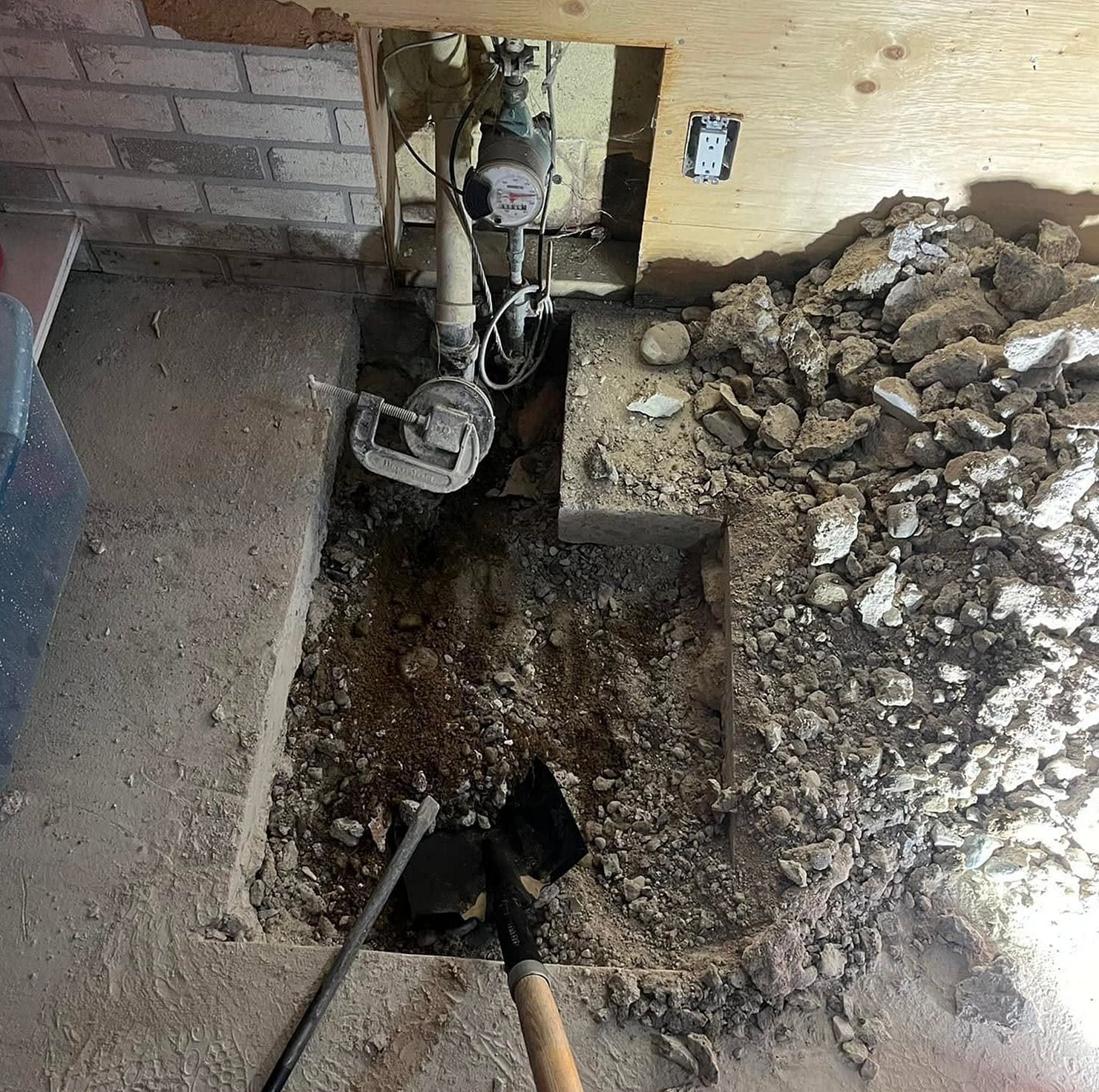
How Leak Detection Works
It starts at the water meter, which shows whether water is moving with every fixture off. Then the hot and cold sides are isolated and pressure tested one at a time, which shows whether the leak is on the supply side and on which line. From there, acoustic listening equipment picks up the hiss of water escaping under a floor, and a thermal camera shows the warm patch a hot-water leak leaves in a slab. Drain leaks are found differently, with a camera run through the line or a water test of one fixture at a time.
Slab Leaks and Austin’s Clay Soil
Much of Austin sits on expansive clay that swells when it is wet and shrinks during drought. Houses built on concrete slabs ride on that movement, and the copper or galvanized lines running under the slab are stressed every time it shifts. Over years, a joint works loose or the pipe wears through where it rubs against concrete or rock. A long dry summer followed by heavy rain is a common time for slab leaks to show up.
Signs of a Hidden Leak
- A water bill that jumps with no change in how the household uses water.
- A warm spot on a tile or wood floor, often noticed with bare feet.
- The sound of running water when every tap and appliance is off.
- Damp, stained or bubbling walls, or baseboards that swell or pull away.
- A musty smell in one room, or mildew where there was none.
- Low water pressure that came on gradually.
- New cracks in a slab floor or tile that line up with a pipe run.
Check the Water Meter Yourself
The meter is usually in a box near the curb or the edge of the yard, under a plastic or metal lid. Most meters have a small triangle or dial, the leak indicator, that turns whenever any water passes through.
- Turn off every faucet, the dishwasher, the washing machine and the ice maker, and make sure no toilet is refilling.
- Open the meter box lid and wipe the glass so you can read it.
- Watch the leak indicator for a full minute. If it turns, water is moving somewhere.
- Write down the reading, wait an hour without using any water, then read it again.
- If the number changed, shut the main valve at the house and check once more. A meter that stops means the leak is inside the house; one that keeps turning points to the line between the meter and the house.
Where Leaks Happen and How They Are Repaired
| Leak location | Typical signs | Repair approaches |
|---|---|---|
| Under the slab | Warm or damp spots on the floor, the sound of running water, a meter that keeps turning | Spot repair through the floor, a tunnel under the slab, or rerouting the line through walls or the attic |
| Inside a wall | Stained or bubbling paint, soft drywall, a musty smell, baseboards swelling | Opening the wall at the leak, replacing the fitting or section, patching the drywall |
| Ceiling | Brown rings, sagging drywall, drips from a light fixture | Tracing it to the bathroom, line or water heater pan above, then repairing at the source |
| Under a sink | Damp cabinet floor, warped particleboard, a drip at a shut-off or trap | New supply lines, shut-off valves or trap; resealing the drain |
| Outdoor line | Soggy lawn between the meter and the house, a muddy meter box | Digging at the leak and repairing it, or replacing the service line |
Leak Questions
Can you find a leak without tearing out the floor?
Usually, yes. Pressure testing shows which line is leaking, and listening equipment and a thermal camera narrow it to a spot, so the only opening made is where the leak is rather than a row of exploratory holes.
Is a slab leak always fixed through the floor?
No. A single leak can be repaired by opening the floor at that spot. When the line under the slab has leaked more than once, rerouting it through the walls or the attic often makes more sense than breaking concrete again.
Will homeowner’s insurance pay for a leak?
Policies differ. Many cover the water damage from a sudden leak and the cost of reaching the pipe, but not the pipe itself. Photograph the damage and the meter reading before anything is opened and call your insurer early.
How do I know if it is a supply leak or a drain leak?
A supply line is under pressure all the time, so it leaks whether or not anything is running, and the meter test catches it. A drain leaks only when water goes down it, so damp spots that appear after showers or laundry point to a drain.
When Leaks Keep Coming Back
A house that has had one pinhole leak after another usually has supply lines that are failing from the inside, and repairing them one at a time costs more than replacing them. The repiping page explains the options. For water that is running now, shut off the main and use the emergency steps.